
Ghid 19Rooms and style
Textures and materials: how to combine them
Two rooms painted the same way can look completely different. The difference is made by textures: glass next to wood, stone next to fabric, shiny metal next to matte ceramic.
Composition
Resin, twine, glass and green
A smoke resin bathtub, a rope chandelier, a resin sink, and a large plant: glossy, matte, and natural in the same composition.
 Smoke Grey Resin Bathtub
€2.596,95
 Rustic rope chandelier
€220,95
3 texturesglossy, matte, natural
 Gray resin sink
€581,95
 Monstera Deliciosa 220 cm
€279,95
În compoziție
-
3textures
Minimum
Smooth and shiny, matte, natural and rough.
-
2×
Repetition
Each material appears at least twice in the room.
-
2–3metals
Maximum
One dominant, the rest in small quantities.
Sketch
Three families of textures
Glossy textures reflect light and feel cooler. Matte ones absorb it and calm the room. Natural textures bring warmth and a sense of craftsmanship. Balance comes from mixing them.
The Rule of Three Textures
Every room needs at least three different textures:
- Smooth and shiny: glass, crystal, chrome, glazed ceramic, mirror.
- Matte: washable paint, honed stone, matte ceramic, matte-painted metal.
- Natural and rough: wood, rope, rattan, linen, wool, plants.
Repeat Each Material
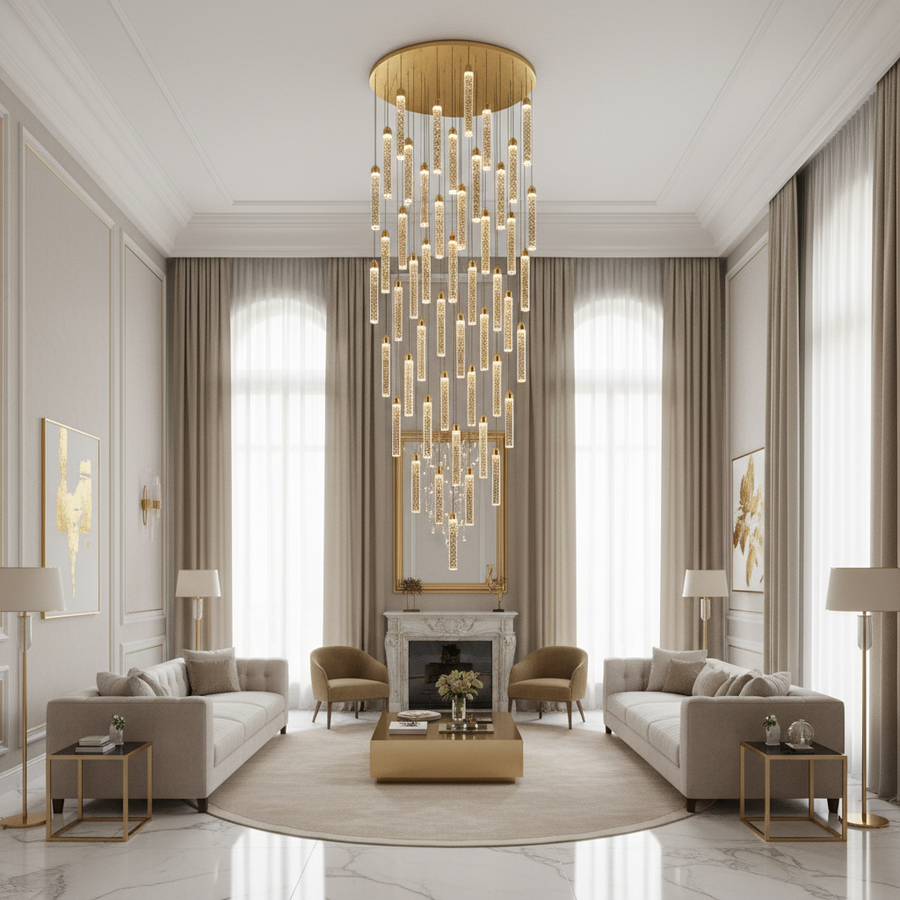
A material that appears only once looks accidental. Repeat it at least twice, in different places in the room: wood at the table and on the mirror frame, gold on the chandelier and on the wall lights, smoked glass on the bathtub and on the sink. The eye makes the connection and the room looks thoughtfully designed.
Contrast Highlights the Materials
Shiny next to matte, smooth next to rough: contrast makes each material stand out. A crystal chandelier on a matte ceiling shines more than on a shiny one. A rope chandelier on an exposed concrete wall looks warmer.
Monochrome Rooms
A room in a single color (all white, all beige, all gray) risks looking flat. Textures are the solution: the same white in shiny ceramic, in linen, and in painted wood looks like three different colors.
Metals
Use at most two or three metals in the same room, with one dominant. In the bathroom, the rule is even stricter: a single metal for everything that touches water.
Plants as Texture
Plants are the simplest natural texture. A tall plant (180–250 cm) in a corner softens the straight lines of the furniture; quality artificial plants do the same, without the worry of watering and light.
Designer's tip: when the room feels "cold" even though the colors are warm, it is usually missing natural texture. Add wood, textiles, or a large plant before you change the color of the walls.
Common Mistakes
- Everything shiny: shiny furniture, shiny tiles, shiny metal.
- A material used only once, with no echo in the room.
- Four or five different metals in the same room.
From the store
Products suitable for this guide
Stoc epuizat

Stoc epuizat

Stoc epuizat

Stoc epuizat

Stoc epuizat

Stoc epuizat

Checklist
Before you order
Five quick checks to ensure the product you choose is right the first time.
- The room has at least three different textures.
- Each material appears at least twice.
- I put glossy next to matte and smooth next to natural.
- I use at most two or three metals, one dominant.
- I have at least one natural texture: wood, textile, or plant.


Free consultationWould you like an opinion on
Would you like an opinion on
your room?
Send us the room dimensions and, if you have one, a photo, to contact@aqualumen.ro. We will recommend products with the right size and style.